How Daylight Saving Time Adjustments Influence Peak Activity Periods on Digital Betting Platforms Across Global Time Zones
Sam Lehmann · Jun 12, 2026
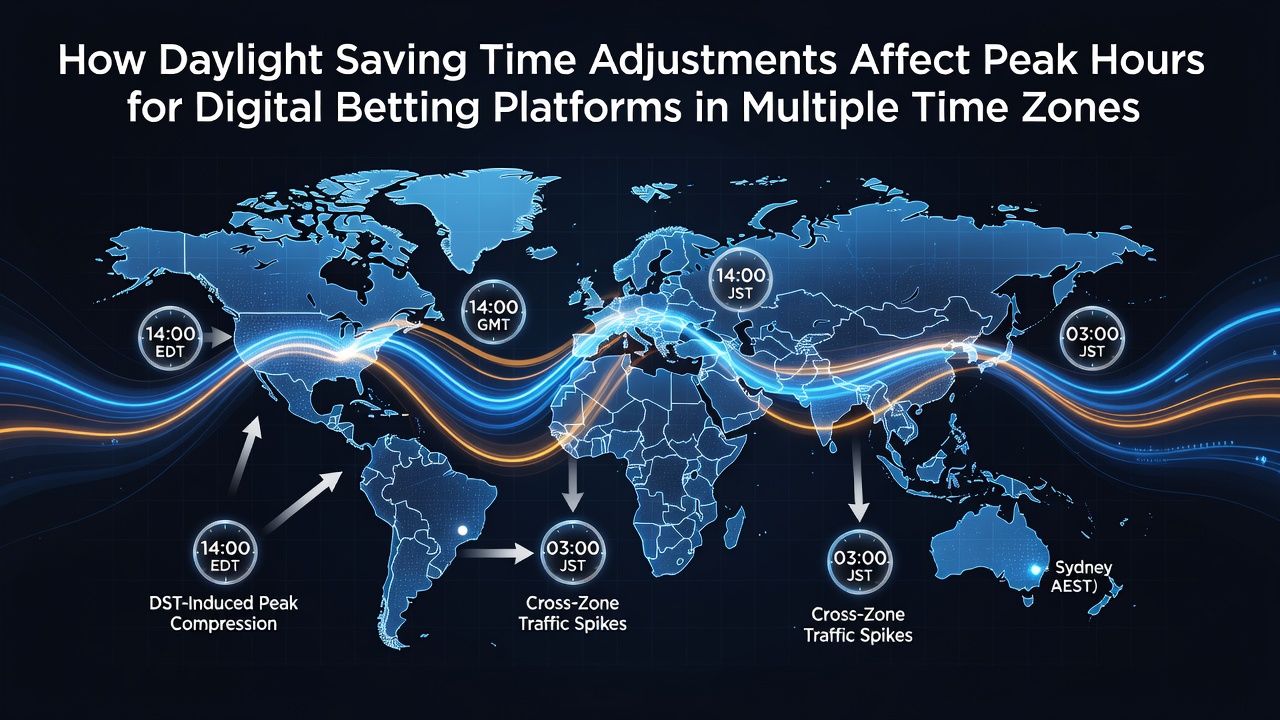
How Daylight Saving Time Adjustments Influence Peak Activity Periods on Digital Betting Platforms Across Global Time Zones
Digital betting platforms operate continuously across multiple continents, yet daylight saving time shifts create measurable disruptions in user engagement patterns that operators track through activity logs and transaction timestamps. When regions advance or retreat their clocks by one hour, the alignment between live sporting events and local user availability changes abruptly, which in turn alters when betting volumes spike on any given day.
Mechanics of Time Zone Shifts in Global Betting Operations
Time zone boundaries already divide user bases into distinct segments, and daylight saving transitions add another layer of complexity because not every jurisdiction observes the change on the same date or at all. Platforms serving North American, European, and Australian markets simultaneously must recalibrate their internal scheduling systems each spring and fall to reflect new local times, while event schedules such as NFL games or Premier League matches remain anchored to specific clock times in their home venues.
Researchers at the National Institute of Standards and Technology maintain official records of these transitions, noting that the United States moves clocks forward on the second Sunday in March and back on the first Sunday in November, whereas parts of Canada follow similar dates but with regional exceptions that fragment user cohorts further. Data from transaction servers shows that peak betting windows, often concentrated in evening hours after work, drift relative to major match times when one side of a border adjusts while another does not.
Observed Changes in User Activity Following Clock Adjustments
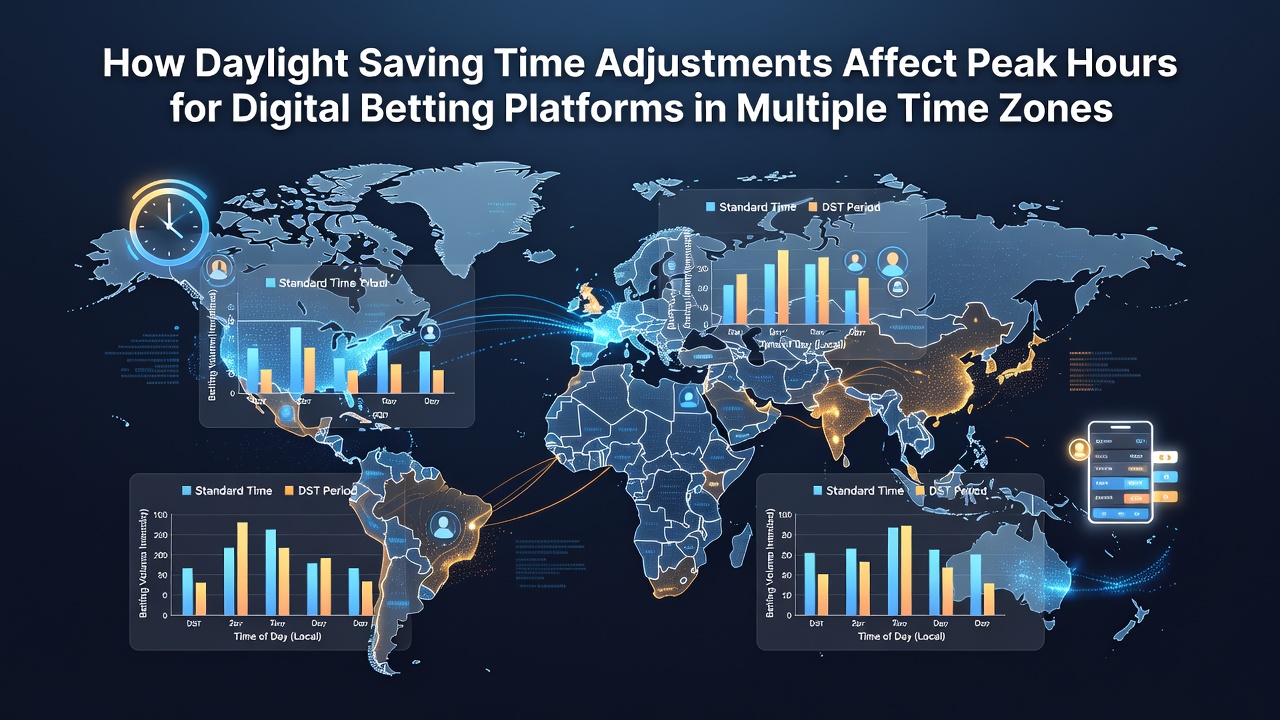
Platform analytics reveal that the Sunday following the March transition typically sees a compression of evening activity in eastern zones, because users accustomed to logging in at 8 p.m. local time suddenly find that same hour aligned with an earlier point in the match calendar. Conversely, the November return to standard time extends certain late-night sessions in western zones, producing secondary peaks that operators had not anticipated in their baseline models.
Studies of multi-jurisdiction operators indicate that European markets, which shift on the last Sunday in March and October, experience staggered effects when overlapping with North American schedules. A soccer match kicking off at 3 p.m. Greenwich Mean Time may land at different points in the American workday depending on whether daylight saving remains active on one continent but not the other, prompting users to place wagers during lunch breaks rather than after dinner.
Regional Variations and Platform Response Strategies
Australian states present yet another pattern because daylight saving applies only in certain territories and begins in October rather than March, creating a six-month offset with northern hemisphere markets. Betting traffic originating from New South Wales and Victoria shows pronounced migration toward earlier morning sessions during their summer period, while Queensland users maintain stable evening patterns year-round, allowing operators to allocate server resources differently across their networks.
Operators respond by deploying dynamic notification systems that adjust push alerts and promotional timing based on each user's registered location. These systems reference authoritative time databases maintained by government agencies, including updates from NIST time services, to ensure that live event reminders reach users at locally appropriate moments rather than at fixed UTC offsets that no longer match daylight saving realities.
Impact on Live Event Alignment and Revenue Timing
Live betting markets tied to specific game minutes experience the most direct effects, since a goal scored at the 60-minute mark occurs at different clock times for users in different zones after a transition. Platforms report that in-play wager volume redistributes across the duration of events, with some regions seeing heavier traffic during the opening half when the adjusted clock places kickoff closer to typical commute hours.
Canadian regulatory filings from provincial gaming authorities document similar patterns in provinces that observe daylight saving versus those that do not, confirming that operators must maintain separate peak-hour forecasts for each sub-market. The cumulative result appears in daily settlement reports that show revenue recognition shifting by one hour relative to calendar dates without any change in underlying user behavior.
Technical Adjustments and Data Management Practices
Backend systems rely on coordinated universal time as the single source of truth, converting each transaction to local time only at the point of user interface display. This architecture prevents double-counting during transition weekends, when a one-hour window can theoretically repeat or vanish depending on the direction of the shift. Maintenance windows scheduled around these periods incorporate buffer time to accommodate the manual verification of logs that automated scripts sometimes misalign.
Industry reports compiled by research institutions in Australia highlight that platforms serving both hemispheres schedule capacity tests in advance of each transition, because simultaneous changes in October and March create overlapping load spikes across time zones that rarely coincide otherwise. These tests confirm that bandwidth allocation models must account for the temporary desynchronization of peak periods rather than assuming static daily curves.
Conclusion
Daylight saving adjustments continue to reshape the temporal distribution of betting activity on platforms that span multiple continents, requiring ongoing recalibration of scheduling, notification, and resource models. Government timekeeping authorities and provincial regulators supply the foundational data that enables operators to maintain alignment between live events and user availability, ensuring that recorded peaks reflect actual engagement rather than artifacts of clock changes. As global markets expand, the precision of these adjustments grows in importance for accurate forecasting and operational stability.